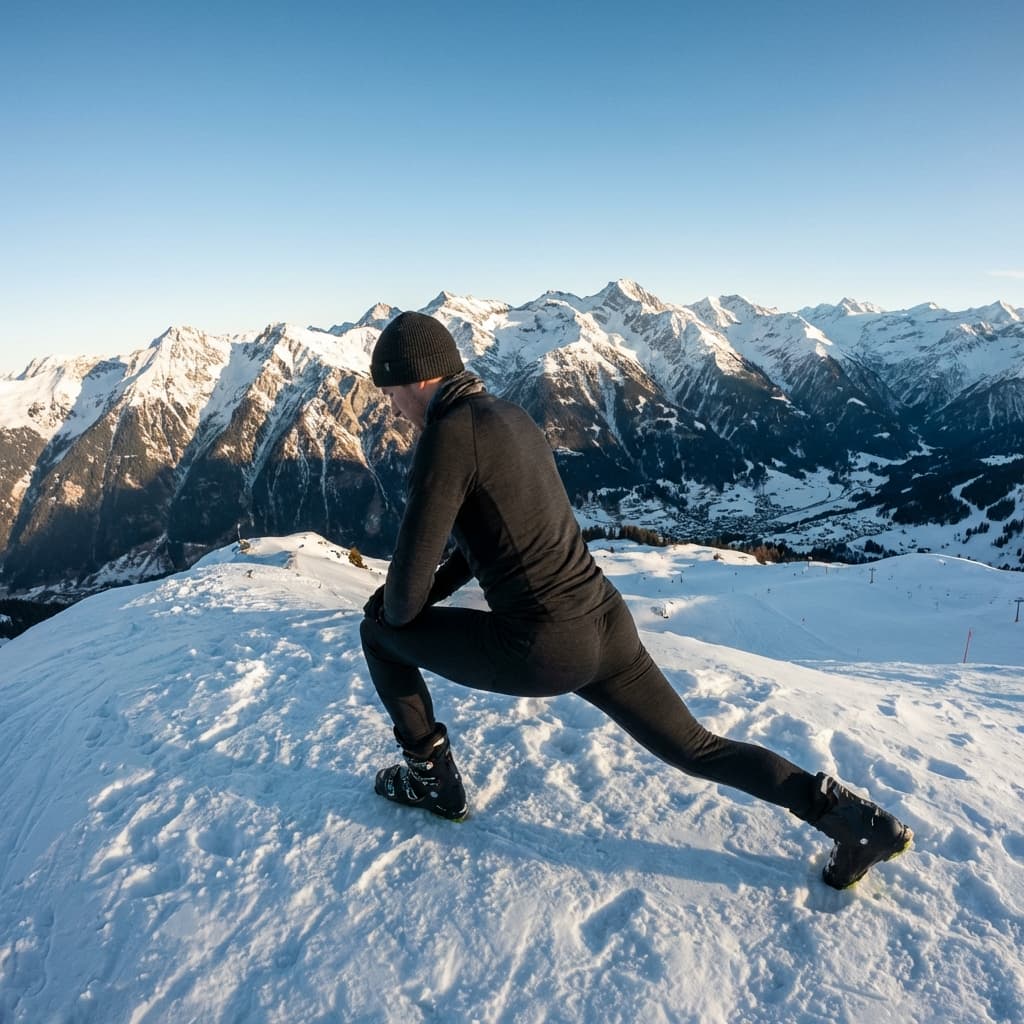
In Switzerland, skiing isn't just a sport; it's a religion. From the wide pistes of Engelberg to the challenging moguls of Andermatt, we live for the weekends. But there is a common pattern we see every January: The "Weekend Warrior" injury.
We sit at desks for 5 days a week, hips flexed and glutes dormant. Then, on Saturday morning, we demand dynamic, explosive performace from our legs for 6 hours straight. It is a recipe for disaster (and a torn ACL).
The Secret Weapon: Eccentric Strength
Skiing is unique because it is largely an eccentric activity. You aren't just pushing against the snow; you are resisting gravity as you carve turns. Your quadriceps have to lengthen while under tension.
In Pilates, we mimic this unique load using the springs on the Reformer—and gravity on the Mat. By training your muscles to control deceleration, we prevent the dreaded "burning thigh" fatigue that hits at 14:00.
3 Pre-season Moves for the Mat
- The Side Lunge (Lateral Control): Skiing happens edge-to-edge. Stand wide. Lunge deeply into one knee, keeping the other leg straight and foot planted. Push back up explosively. Why: Strengthens the glute medius for knee stability.
- The Wall Sit (Isometric Stamina): It burns, and it works. Slide down a wall until knees are at 90 degrees. Hold for 45-60 seconds. Keep your spine long. Why: Builds the endurance needed for long runs.
- Criss-Cross (Rotational Core): Lying on your back, rotate elbow to opposite knee. Why: Your upper body must remain quiet and dissociated while your legs do the work. This teaches that separation.
Your Knees Will Thank You
Knee injuries often stem from weak hips. When the glute doesn't fire, the knee collapses inward. A consistent Pilates practice bulletproofs your knees by waking up the supporting musculature of the hip. Don't wait until the first snowfall to start training.
Align by Frankie Journal