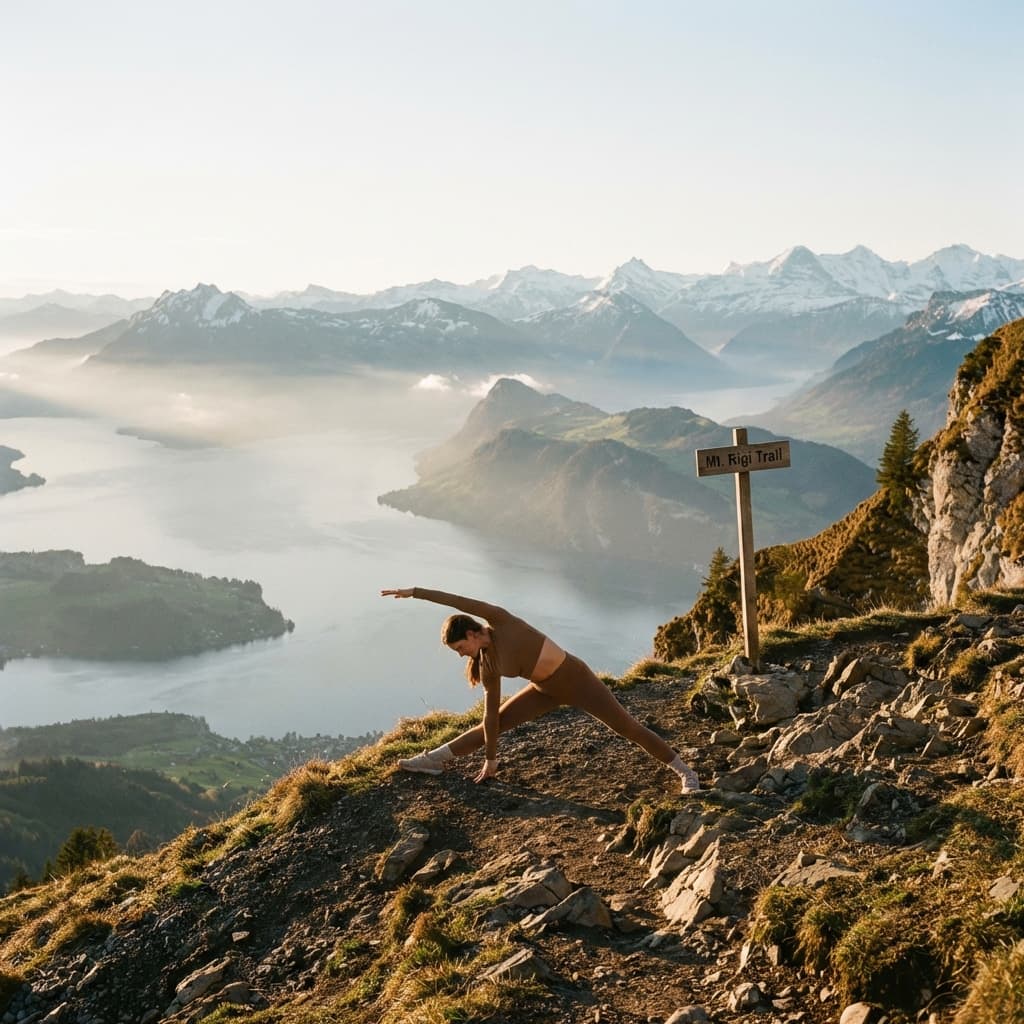
Living in Luzern means the mountains are our backyard. From the steep ascent of Mt. Pilatus to the rolling paths of the Rigi, hiking is deeply embedded in our local culture. But often, we focus solely on leg strength and cardio, neglecting the foundation that holds it all together: the core.
The Hiker's Dilemma
Common complaints among hikers—lower back pain, knee strain during descent, and rolled ankles—often stem from a lack of pelvic stability. When the core is weak, the legs have to overcompensate, leading to fatigue and poor alignment.
How Pilates Helps
At Align by Frankie, we see Pilates as essential cross-training for the trails.
- Eccentric Control: Pilates teaches you to control muscles as they lengthen. This is exactly what happens to your quadriceps when you walk downhill. Better eccentric control means happier knees.
- Proprioception: Balance isn't just about standing on one foot. It's about knowing where your body is in space. This awareness is crucial when navigating uneven rocky terrain.
- Breath Efficiency: Learning to breathe laterally into the ribs (a key Pilates principle) increases lung capacity, making those high-altitude ascents feel a little easier.
Next time you plan a weekend hike, consider joining a Friday Signature Flow class to prep your body. Your knees will thank you.
Align by Frankie Journal